
Bicycle Collections (#54)
Sent by Marianne from Utrecht, Netherlands.


Sent by Ingo from Krefeld in North Rhine-Westphalia, Germany.
Issum is a municipality in the district of Kleve, in North Rhine-Westphalia, Germany. It is located approximately 5 kilometres (3.1 mi) east of Geldern (read more).


Sent by David from Shenyang in Liaoning Province, China.
Shenyang, formerly known by its Manchu name Mukden, is a sub-provincial city in China and the provincial capital of Liaoning province. It is the province's most populous city with a population of 9,070,093 as of the 2020 census, also making it the largest city in Northeast China by urban population, and the second-largest by metropolitan population (behind Harbin). The Shenyang metropolitan area is one of the major megalopolises in China, with a population of over 23 million. The city's administrative region includes the ten metropolitan districts, the county-level city of Xinmin, and the counties of Kangping and Faku (read more).


Sent by Monna from Kunshan in Jiangsu Province, China.
Zhouzhuang (Chinese: 周庄; pinyin: Zhōuzhuāng; Wu: Tseu-zaon) is a water town known for its canals in Jiangsu province, China. It is located within the administrative area of Kunshan, 30 km southeast of the city centre of Suzhou.
Zhouzhuang is a popular tourist destination, classified as a AAAAA scenic area by the China National Tourism Administration. It is noted for its profound cultural background, well preserved ancient residential houses, and elegant watery views. A 2017 article in the Smithsonian Magazine described Zhouzhuang as "the most famous and most commercialized ancient water town in China," noting that its architecture "dates back more than 900 years, with about 60 original brick archways and 100 original courtyards." It has also been called "Venice of the East".
CNN ranked Zhouzhuang the third most beautiful water town in China in 2017 and included it in its 2019 collection of Asia's 13 most picturesque towns (read more).

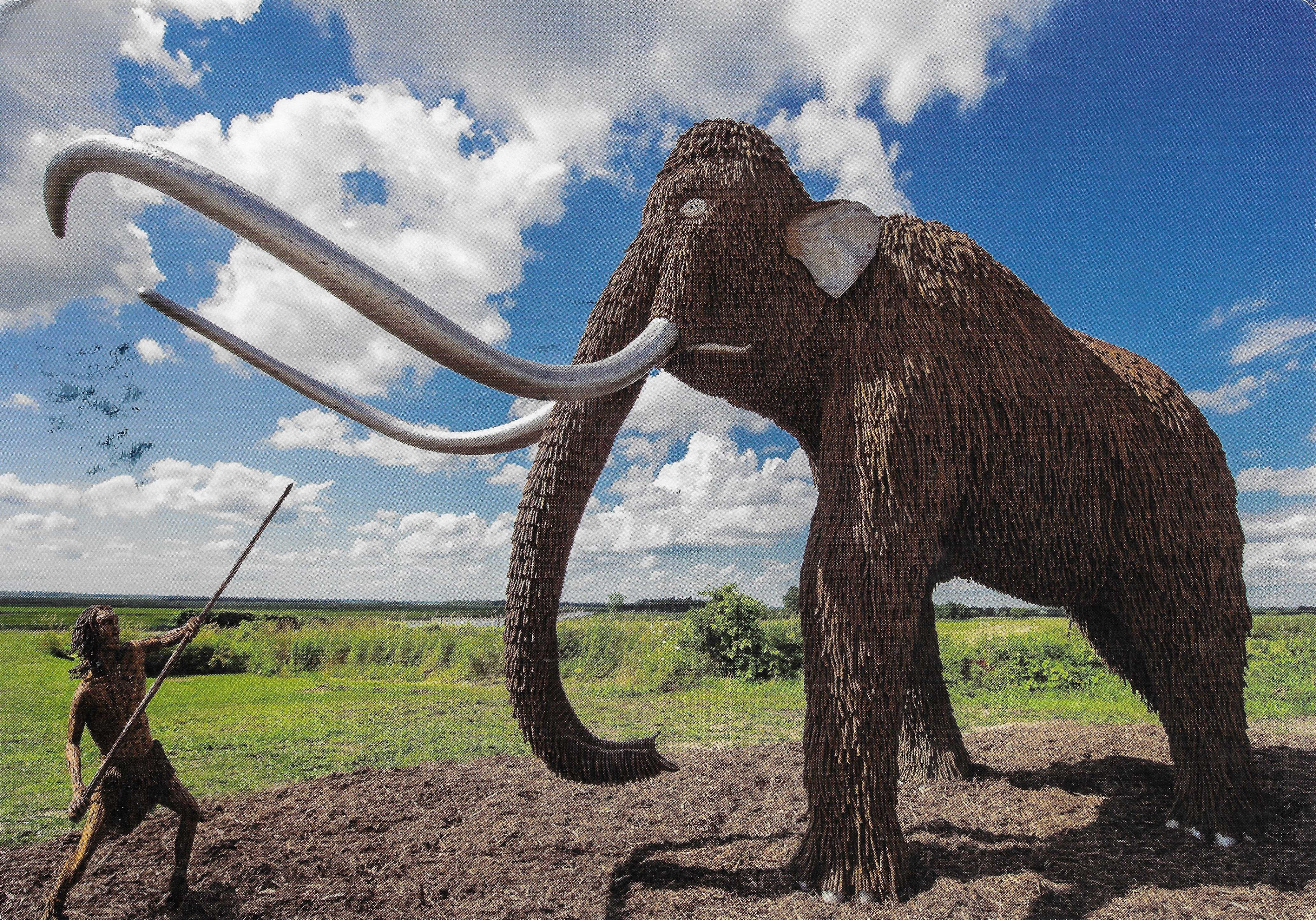
The Ramsar Convention of the United Nations has formally recognized Horicon Marsh as a wetland of international importance. This renowned marsh is now home to the Horicon Marsh Education and Visitor Center.
The Wildlife Education Program has been conducted at the marsh since the mid-1980s. This program focuses on the marsh's abundant wildlife resources, their ecology and applied management. It relies on diverse wildlife to develop a wide range of educational programs aimed at introducing and sharing our native wildlife with a broad audience.
The Horicon Marsh Education and Visitor Center, completed in 2009, has a new, modern design and enhanced visitor services (read more).


Pinnawala Elephant Orphanage (Sinhala: පින්නවල අලි අනාථාගාරය), is a captive breeding and conservation institute for wild Asian elephants located at Pinnawala village, 13 km (8.1 mi) northeast of Kegalle town in Sabaragamuwa Province of Sri Lanka. Pinnawala has the largest herd of captive elephants in the world. In 2023, there were 71 elephants, including 30 males and 41 females from 3 generations, living in Pinnawala.
The orphanage was founded to care and protect the many orphaned unweaned wild elephants found wandering in and near the forests of Sri Lanka. It was established in 1975 by the Sri Lanka Department of Wildlife Conservation (DWC).
On 31 August 2021, a 25 year old elephant named Surangi gave birth to twin male baby elephants at the orphanage. It also marked the first instance of the birth of twin elephants in Sri Lanka after a gap of 80 years since 1941 (read more).


The monarchy of Denmark is a constitutional institution and a historic office of the Kingdom of Denmark. The Kingdom includes Denmark proper and the autonomous territories of the Faroe Islands and Greenland. The Kingdom of Denmark was already consolidated in the 8th century, whose rulers are consistently referred to in Frankish sources (and in some late Frisian sources) as "kings" (reges). Under the rule of King Gudfred in 804 the Kingdom may have included all the major provinces of medieval Denmark.
The current unified Kingdom of Denmark was founded or re-united by the Viking kings Gorm the Old and Harald Bluetooth in the 10th century. Originally an elective monarchy, it became hereditary only in the 17th century during the reign of Frederick III. A decisive transition to a constitutional monarchy occurred in 1849 with the writing of the first democratic constitution, replacing the vast majority of the old absolutist constitution. The current Royal House is a branch of the ducal House of Glücksburg, originally from Schleswig-Holstein in modern-day Germany, the House of Glücksburg itself being a collateral branch of the House of Oldenburg. The House of Glücksburg also produced the monarchs of Norway, of the United Kingdom and the former monarch of Greece in the direct male line (read more).


Sent by Taouvik Boukari from Togo.
Togo, officially the Togolese Republic, is a country in West Africa. It is bordered by Ghana to the west, Benin to the east and Burkina Faso to the north. It is one of the least developed countries and extends south to the Gulf of Guinea, where its capital, Lomé, is located. It is a small, tropical country, spanning 57,000 square kilometres (22,000 square miles) with a population of approximately 8 million, and it has a width of less than 115 km (71 mi) between Ghana and its eastern neighbour Benin (read more).


One of the three postcards sent by stranger from the highest Post Office in the world, in Hikkim in Himachal Pradesh. Unfortunetely the postcard is not stamped and cancelled. The three postcards were sent in an envelope.
Kye Gompa (Tibetan: དཀྱིལ་དགོན་, Wylie: dkyil dgon; also spelled Kyi, Ki, Key, or Kee; pronounced like the English word key) is a Tibetan Buddhist monastery of the Gelugpa sect located on top of a hill at an altitude of 4,166 metres (13,668 ft) above sea level, close to the Spiti River, in the Spiti Valley of Himachal Pradesh, Lahaul and Spiti district, India.
It is the largest monastery of the Spiti Valley and a religious training centre for lamas. It reportedly had 100 monks in 1855.
The monastery is dedicated to Lochen Tulku, the 24th reincarnation of the great translator Lotsawa Rinchen Zangpo.
It is about 12 km (7.5 mi) north of Kaza and 210 km (130 mi) from Manali by road (read more).

One of the three postcards sent by stranger from the highest Post Office in the world, in Hikkim in Himachal Pradesh. Unfortunetely the postcard is not stamped and cancelled. The three postcards were sent in an envelope.
Tabo Monastery (or Tabo Chos-Khor Monastery) is located in the Tabo village of Spiti Valley, Himachal Pradesh, northern India. It was founded in 996 CE in the Tibetan year of the Fire Ape by the Tibetan Buddhist lotsawa (translator) Rinchen Zangpo (Mahauru Ramabhadra), on behalf of the king of western Himalayan Kingdom of Guge, Yeshe-Ö. Tabo is noted for being the oldest continuously operating Buddhist enclave in both India and the Himalayas. A large number of frescoes displayed on its walls depict tales from the Buddhist pantheon. There are many priceless collections of thankas (scroll paintings), manuscripts, well-preserved statues, frescos and extensive murals which cover almost every wall. The monastery is in need of refurbishing as the wooden structures are aging and the thanka scroll paintings are fading. After the earthquake of 1975, the monastery was rebuilt, and in 1983 a new Du-kang or Assembly Hall was constructed. It is here that the 14th Dalai Lama held the Kalachakra ceremonies in 1983 and 1996. The monastery is protected by the Archaeological Survey of India (ASI) as a national historic treasure of India (read more).


Tomar (Portuguese pronunciation: [tuˈmaɾ]), also known in English as Thomar (the ancient name of Tomar), is a Portuguese city and a municipality in the historical Ribatejo Portuguese province, and in Santarém district. The town proper has a population of about 20,000. The municipality population in 2011 was 40,677, in an area of 351.20 km2 (135.60 sq mi).
The town of Tomar was created inside the walls of the Convento de Cristo, constructed under the orders of Gualdim de Pais, the fourth Grand Master of the Knights Templar in Portugal in the late 12th century.
Tomar was the last Templar town to be commissioned for construction and one of Portugal's historical jewels. The town was especially important in the 15th century when it was a center of Portuguese overseas expansion under Henry the Navigator, the Grand Master of the Order of Christ, successor organization to the Knights Templar in Portugal (read more).


Sent by Olga of Latvia from Chișinău, Moldova.


