This is a project of collecting postcards from all over the world. Please send me postcards of your beautiful countries, states, islands, regions and subjects of interesting places, so I can feature them here.
Translate
Thursday, April 19, 2012
Germany - Berlin - Alexanderplatz
Alexanderplatz, Berlin in 1979.
Sent by Gina, a postcrosser from Germany.
This is from Wikipedia : Alexanderplatz (pronounced [ʔalɛkˈsandɐˌplats]) is a large public square and transport hub in the central Mitte district of Berlin, near the Fernsehturm. Berliners often call it simply Alex, referring to a larger neighbourhood stretching from Mollstraße in the northeast to Spandauer Straße and the City Hall in the southwest.
Originally a cattle market outside the city fortifications, it was named in honor of a visit of the Russian Emperor Alexander I to Berlin on 25 October 1805 by order of King Frederick William III of Prussia. The square gained a prominent role in the late 19th century with the construction of the Stadtbahn station of the same name and a nearby market hall, followed by the opening of a department store of Hermann Tietz in 1904, becoming a major commercial centre. The U-Bahn station of the present-day U2 line opened on 1 July 1913.
Its heyday was in the 1920s, when together with Potsdamer Platz it was at the heart of Berlin's nightlife, inspiring the 1929 novel Berlin Alexanderplatz (see 1920s Berlin) and the two films based thereon, Piel Jutzi's 1931 film and Rainer Werner Fassbinder's 15½ hour second adaptation, released in 1980. About 1920 the city's authorities started a rearrangement of the increasing traffic flows laying out a roundabout, accompanied by two buildings along the Stadtbahn viaduct, Alexanderhaus and Berolinahaus finished in 1932 according to plans designed by Peter Behrens.
Finland - Kuopio
KUOPIO
Sent by Kaija, a postcrosser from Finland.
This is from Wikipedia : Kuopio is a city and a municipality located in the region of Northern Savonia, Finland. A population of 97,552 makes it the ninth biggest city in the country. The city has a total area of 2,317.24 square kilometres (894.69 sq mi), of which 719.85 km2 (277.94 sq mi) is water and half forest. The population density is only 61 /km2 (160 /sq mi), but the city's urban areas are populated very densely (urban area: 1 617.6 /km²), nationally second only to capital Helsinki (urban area: 1,690.0/km². The population of the entire Kuopio region is 119,472.
There are several explanations behind the name Kuopio. The first is that in the 16th century, a certain influential person named Kauhanen in Tavinsalmi changed his name to Skopa and the people's pronunciation was Coopia and finally Cuopio. The second explanation is that it comes from the verb kuopia, meaning when, for example, a horse paws the ground with its hoof. A third theory is that it came from a certain Karelian man's name Prokopij, from Ruokolahti in the Middle Ages. This is the most probable explanation, supported by the Research Institute for the Languages of Finland.
Sent by Kaija, a postcrosser from Finland.
This is from Wikipedia : Kuopio is a city and a municipality located in the region of Northern Savonia, Finland. A population of 97,552 makes it the ninth biggest city in the country. The city has a total area of 2,317.24 square kilometres (894.69 sq mi), of which 719.85 km2 (277.94 sq mi) is water and half forest. The population density is only 61 /km2 (160 /sq mi), but the city's urban areas are populated very densely (urban area: 1 617.6 /km²), nationally second only to capital Helsinki (urban area: 1,690.0/km². The population of the entire Kuopio region is 119,472.
There are several explanations behind the name Kuopio. The first is that in the 16th century, a certain influential person named Kauhanen in Tavinsalmi changed his name to Skopa and the people's pronunciation was Coopia and finally Cuopio. The second explanation is that it comes from the verb kuopia, meaning when, for example, a horse paws the ground with its hoof. A third theory is that it came from a certain Karelian man's name Prokopij, from Ruokolahti in the Middle Ages. This is the most probable explanation, supported by the Research Institute for the Languages of Finland.
USA - Washington - Olympic National Park (3)
MOUNT OLYMPUS
Olympic National Park, Washington
The beauty of the state of Washington is depicted in this breath-taking view of Mount Olympus located in the Olympic National Park. The Blue Harebell flowers add a splendid splash of color.
Sent by Greg, a postcrosser from Washington, USA.
Wednesday, April 18, 2012
Italy - Residences of the Royal House of Savoy
Palace of Venaria, part of Residences of the Royal House of Savoy, a UNESCO World Heritage Site.
Sent by Matia, a postcrosser from Italy.
This is from UNESCO : When Emmanuel-Philibert, Duke of Savoy, moved his capital to Turin in 1562, he began a vast series of building projects (continued by his successors) to demonstrate the power of the ruling house. This outstanding complex of buildings, designed and embellished by the leading architects and artists of the time, radiates out into the surrounding countryside from the Royal Palace in the 'Command Area' of Turin to include many country residences and hunting lodges.
Saturday, April 14, 2012
Friday, April 13, 2012
Serbia - Novi Sad
Greetings From Novi Sad. Pozdrav Iz Novog Sada.
Sent by Jelena, a postcrosser from Novi Sad, Serbia.
This is from Wikipedia : Novi Sad (Serbian Cyrillic: Нови Сад, pronounced [nɔ̝̂v̞iː sâːd] is the second largest city in Serbia, capital of the northern Serbian province of Vojvodina, and the administrative centre of the South Bačka District.
According to preliminary results of the latest census in Serbia conducted in October 2011, the urban area has a population of 221,854, while its municipal area has a population of 335,701. It is located in the southern part of Pannonian Plain, on the border of the Bačka and Srem regions, on the banks of the Danube river and Danube-Tisa-Danube Canal, facing the northern slopes of Fruška Gora mountain.
The city was founded in 1694, when Serb merchants formed a colony across the Danube from the Petrovaradin fortress, a Habsburg strategic military post. In the 18th and 19th centuries, it became an important trading and manufacturing centre, as well as a centre of Serbian culture of that period, earning the nickname Serbian Athens. The city was heavily devastated in the 1848 Revolution, but it was subsequently restored. During the city's long history, it has maintained its multi-cultural identity, with Serbs, Hungarians and Germans being the main ethnic groups. Today, Novi Sad is an industrial and financial centre of the Serbian economy, as well as a major cultural hub.
Sent by Jelena, a postcrosser from Novi Sad, Serbia.
This is from Wikipedia : Novi Sad (Serbian Cyrillic: Нови Сад, pronounced [nɔ̝̂v̞iː sâːd] is the second largest city in Serbia, capital of the northern Serbian province of Vojvodina, and the administrative centre of the South Bačka District.
According to preliminary results of the latest census in Serbia conducted in October 2011, the urban area has a population of 221,854, while its municipal area has a population of 335,701. It is located in the southern part of Pannonian Plain, on the border of the Bačka and Srem regions, on the banks of the Danube river and Danube-Tisa-Danube Canal, facing the northern slopes of Fruška Gora mountain.
The city was founded in 1694, when Serb merchants formed a colony across the Danube from the Petrovaradin fortress, a Habsburg strategic military post. In the 18th and 19th centuries, it became an important trading and manufacturing centre, as well as a centre of Serbian culture of that period, earning the nickname Serbian Athens. The city was heavily devastated in the 1848 Revolution, but it was subsequently restored. During the city's long history, it has maintained its multi-cultural identity, with Serbs, Hungarians and Germans being the main ethnic groups. Today, Novi Sad is an industrial and financial centre of the Serbian economy, as well as a major cultural hub.
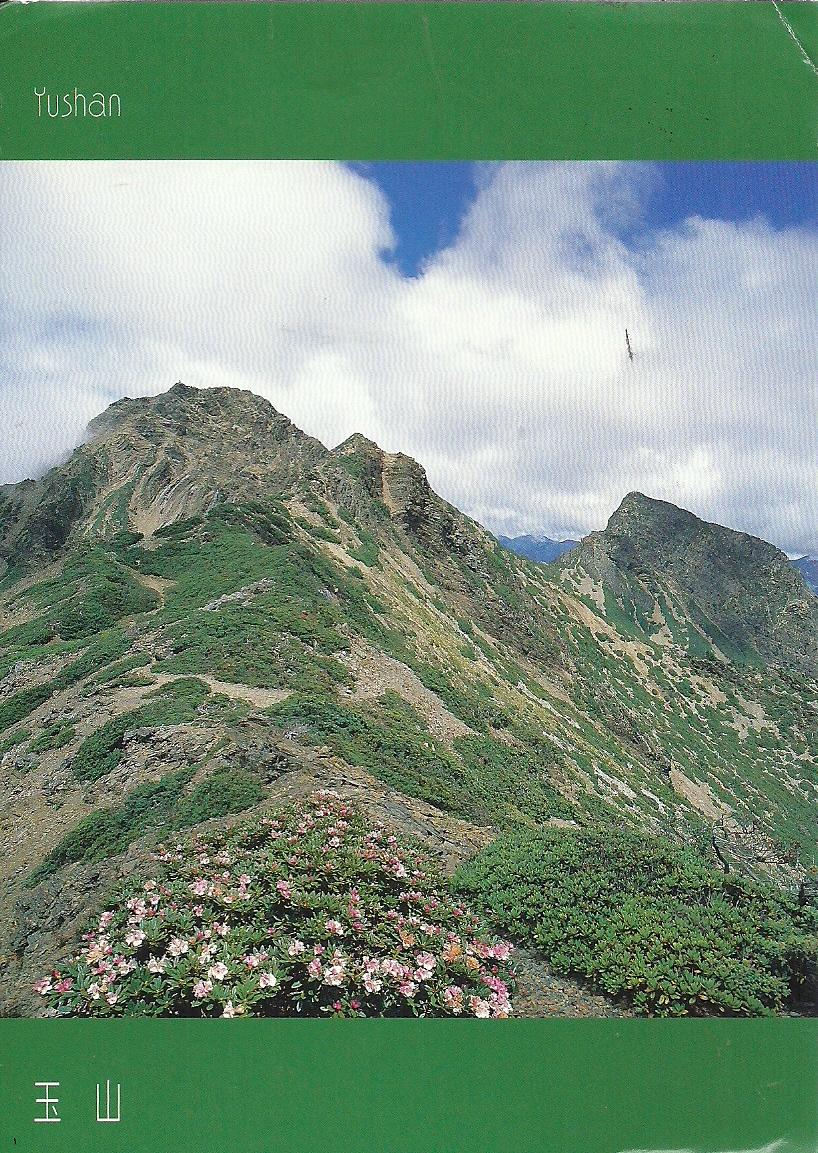
Taiwan - Yushan Mountain
Yushan (Nantou, Taiwan).
Sent by YungYa, a postcrosser from Taiwan.
This is from Wikipedia : Yushan (Chinese: 玉山; pinyin: Yùshān; literally ‘Jade Mountain’; it can also be referred to as Mount Yu) in Taiwan is the highest mountain in East Asia and the fourth highest mountain on an island. In the past, Yushan was known among English-speaking expats and missionaries as Mt. Morrison, thought to have been named in honor of the 19th century missionary Robert Morrison. (More about this in the History section.) Today, the mountain is referred to as Yushan or Jade Mountain.
In the winter, Yushan is often capped with thick snow which makes the entire peak shine like stainless jade, hence its name. On July 21, 2009. Yushan was elected one of 28 finalists in the New7Wonders of Nature voting campaign. It even had held the top position in the “Mountains and Volcanos” category on the list of first round voting of the 77 nominees ended on July 7, 2009.
Yushan and surrounding mountains belong to Yushan Range, which is part of Yushan National Park in Taiwan. Yushan National Park is Taiwan's largest, highest and least accessible national park. It contains the largest tract of wilderness remaining in Taiwan and is also valued for its pristine forests and faunal diversity, including many endemic species.
The highest point of Yushan range, Yushan, is 3,952 metres (12,966 ft) above sea level. Yushan was once in the ocean and raised to the current height because the Eurasian Plate slid under the neighboring Philippine Sea Plate.
The ocean waters off Taiwan's east coast are deep; in fact, submarine slopes plunge down to the Pacific Ocean at a grade of 1:10 and the ocean reaches a depth of more than 4,000 metres (13,100 ft) about 50 kilometres (30 mi) from the coast. From this perspective, Yushan is even more magnificent if you consider it rises 8,000 metres (26,200 ft) steeply from the nearby ocean floor in such a short distance – est 100 kilometres (60 mi).
Germany - Bielefeld
A map and multiviews of Bielefeld.
Sent by Alex, a postcrosser from Switzerland.
This is from Wikipedia : Bielefeld (German pronunciation: [ˈbiːləfɛlt]) is a city in the Ostwestfalen-Lippe Region in the north-east of North Rhine-Westphalia, Germany. With a population of 323,000, it is also the most populous city in the Regierungsbezirk Detmold. Its current mayor is Pit Clausen.
The historical centre of the city is situated north of the Teutoburg Forest, but modern Bielefeld also incorporates boroughs on the opposite side and on the hilltops.
Bielefeld is home to a significant number of internationally operating companies, including Dr. Oetker, Gildemeister and Schüco. It has a university and several Fachhochschulen.
Founded in 1215 by Count Hermann IV of Ravensberg to guard a pass crossing the Teutoburg Forest, Bielefeld was the "city of linen" as a minor member of the Hanseatic League.
After the Cologne-Minden railway opened in 1849, the Bozi brothers constructed the first large mechanised spinning mill in 1851. The Ravensberg Spinning Mill was built from 1854 to 1857, and metal works began to open in the 1860s.
Between 1904 and 1930, Bielefeld grew, opening a railway station, a municipal theatre, and finally, the Rudolf-Oetker-Halle concert hall, famous for its excellent acoustics. The Dürkopp car was produced 1898-1927. After printing emergency money (German: Notgeld) in 1923 during the inflation in the Weimar Republic, Bielefeld was one of several towns that printed very attractive and highly collectable banknotes with designs on silk, linen and velvet. These pieces were issued by the Bielefeld Stadtsparkasse (town saving's bank) and were sent all around the world in the early 1920s. These pieces are known as 'stoffgeld' - that is, money made from fabric. Many examples can be found on the http://www.notgeld.com website, where a new catalogue listing all the variants of different coloured borders and edges made on the 100m piece is being compiled.
Bicycle (16)
Author : Anna Semenova / Landscape with a bicycle and a mailbox.
Sent by Tanya, a postcrosser from Belarus.
France - Pays-de-la-Loire - 49 Maine-Et-Loire - Mapcard
LE MAINE-ET-LOIRE (49)
Sent by Agnès, a postcrosser from France.
This is from Wikipedia : Maine-et-Loire (French pronunciation: [mɛn.e.lwaʁ]) is a department in west-central France, in the Pays de la Loire region.
Maine-et-Loire is one of the original 83 departments created during the French Revolution on March 4, 1790. Originally it was called Mayenne-et-Loire, but its name was changed to Maine-et-Loire in 1791. It was created from part of the former province of Anjou. Its present name is drawn from the former province of Maine and the Loire River, which runs through it.
Maine-et-Loire is part of the current region of Pays-de-la-Loire and is surrounded by the departments of Ille-et-Vilaine, Mayenne, Sarthe, Indre-et-Loire, Vienne, Deux-Sèvres, Vendée, and Loire-Atlantique.
It has a varied landscape, with forested ranges of hills in the south and north separated by the valley of the Loire. The highest point is Colline des Gardes (689 feet/210m).
The area has many navigable rivers such as the Loire, Sarthe, Mayenne, Loir, and Authion.
The inhabitants of Maine-et-Loire are called Angevins, from the former province of Anjou.
Russia - Vologda Oblast - St. Sophia Cathedral
St. Sophia Cathedral in Vologda.
Sent by Anastasia, a postcrosser from Moscow, Russia.
This is from Wikipedia : Saint Sophia Cathedral (Russian: Софийский собор) is a Russian Orthodox cathedral, the oldest surviving building in the city of Vologda. It was constructed between 1568 and 1570 under personal supervision of Tsar Ivan the Terrible in the period when Vologda was the capital of the Oprichnina lands in Russia, and completed in 1587. The cathedral is located on the right bank of the Vologda River, just outside the former fortress known as the Vologda Kremlin.
The cathedral was designated by the Russian government as an architectural monument of federal significance.
The cathedral was built in 1568-1570, when Ivan the Terrible introduced the Oprichnina and made Vologda its capital. The model after which the cathedral was built was the Assumption Cathedral in the Moscow Kremlin. Ivan personally supervised the construction, and the builders were permitted to use almost unlimited resources. Ivan also, for unknown reason, ordered the cathedral's unusual orientation: its altar apse does not face east as is common in Orthodox Churches but rather northeast. In 1571, Ivan the Terrible unexpectedly left Vologda and returned to Moscow. Soon afterwards, he abolished the Oprichnina and never showed any further interest in Vologda. He even gave an order for the cathedral to be demolished before he left the city, but subsequently withdrew it. By that time, the cathedral was constructed but not yet decorated or consecrated. The cathedral was completed during the reign of Feodor Ivanovich, the son of Ivan the Terrible, and consecrated in 1587.
The frescoes inside the cathedral were made between 1685 and 1687 by a group of painters from Yaroslavl under the direction of Dmitry Plekhanov.
The bell-tower of the cathedral was built in 1869—1870 by Vladimir Schildknecht, the chief architect of Vologda Governorate, in the pseudo-gothic style. The lowest floor remains from the older bell-tower, constructed in 1654—1659.
In Soviet times, the cathedral was shut down and now serves as a museum.
Finland - Animals of Finland
Animals of Finland.
Sent by Eija, a postcrosser from Finland.
Note : This is the biggest postcard ever received. It is the size of A4 paper. Terima kasih banyak-banyak (thank you very much) Eija :)
Tuesday, April 10, 2012
Saturday, April 7, 2012
Belarus - Brest
Multiviews of Brest.
Sent by Elena, a postcrosser from Brest, Belarus.
This is from Wikipedia : Brest (Belarusian: Брэст Brest or traditionally Берасце Bieraście; Ukrainian: Берестя Berestia; Russian: Брест Brest; see also alternative names), formerly also Brest-on-the-Bug ("Brześć nad Bugiem" in Polish) and Brest-Litovsk ("Brześć Litewski" in Polish, literally "Lithuanian Brest"), is a city (population 310,800 in 2010) in Belarus at the border with Poland opposite the city of Terespol, where the Bug River and Mukhavets rivers meet. It is the capital city of the Brest voblast.
Being situated on the main railway line connecting Berlin and Moscow, and an intercontinental highway (the European route E30), Brest became a principal border crossing since World War II in Soviet times. Today it links the European Union and the Commonwealth of Independent States. Because of the break-of-gauge at Brest, where the Russian broad gauge meets the European standard gauge, all passenger trains, coming from Poland, must have their bogies replaced here, to travel on across Belarus, and the freight must be transloaded from cars of one gauge to cars of another. Some of the land in the Brest rail yards remains contaminated as a result of the transshipment of radioactive materials here since Soviet days although cleanup operations have been taking place.
There are several theories of the city name origin. The most common are as follows,
* the name of the city comes from the Slavic root beresta meaning birch, bark,
* the name of the city comes from the Slavic root berest meaning elm,
* the name of the city comes from the Lithuanian word brasta meaning ford.
Once a center of Jewish scholarship, the city's name in Yiddish, is בריסק ("Brisk"), hence the term "Brisker" used to describe followers of the influential Soloveitchik family of rabbis.
The traditional Ukrainian name for the city is Берестя (transliterated Berestia).
Sent by Elena, a postcrosser from Brest, Belarus.
This is from Wikipedia : Brest (Belarusian: Брэст Brest or traditionally Берасце Bieraście; Ukrainian: Берестя Berestia; Russian: Брест Brest; see also alternative names), formerly also Brest-on-the-Bug ("Brześć nad Bugiem" in Polish) and Brest-Litovsk ("Brześć Litewski" in Polish, literally "Lithuanian Brest"), is a city (population 310,800 in 2010) in Belarus at the border with Poland opposite the city of Terespol, where the Bug River and Mukhavets rivers meet. It is the capital city of the Brest voblast.
Being situated on the main railway line connecting Berlin and Moscow, and an intercontinental highway (the European route E30), Brest became a principal border crossing since World War II in Soviet times. Today it links the European Union and the Commonwealth of Independent States. Because of the break-of-gauge at Brest, where the Russian broad gauge meets the European standard gauge, all passenger trains, coming from Poland, must have their bogies replaced here, to travel on across Belarus, and the freight must be transloaded from cars of one gauge to cars of another. Some of the land in the Brest rail yards remains contaminated as a result of the transshipment of radioactive materials here since Soviet days although cleanup operations have been taking place.
There are several theories of the city name origin. The most common are as follows,
* the name of the city comes from the Slavic root beresta meaning birch, bark,
* the name of the city comes from the Slavic root berest meaning elm,
* the name of the city comes from the Lithuanian word brasta meaning ford.
Once a center of Jewish scholarship, the city's name in Yiddish, is בריסק ("Brisk"), hence the term "Brisker" used to describe followers of the influential Soloveitchik family of rabbis.
The traditional Ukrainian name for the city is Берестя (transliterated Berestia).
Germany - Berlin - Reichstag Dome
Reichstag Dome in Berlin.
Sent by Stephanie, a postcrosser who lives near Cologne, Germany.
This is from Wikipedia : The current Reichstag dome is a glass dome constructed on top of the rebuilt Reichstag building in Berlin. It was designed by architect Norman Foster and built to symbolize the reunification of Germany. The distinctive appearance of the dome has made it a prominent landmark in Berlin.
The Reichstag dome is a large glass dome with a 360 degree view of the surrounding Berlin cityscape. The debating chamber of the Bundestag, the German parliament, can be seen down below. A mirrored cone in the center of the dome directs sunlight into the building, and so that visitors can see the working of the chamber. The dome is open to the public and can be reached by climbing two steel, spiraling ramps that are reminiscent of a double-helix. The Dome symbolizes that the people are above the government, as was not the case during national socialism.
The glass dome was also designed by Foster to be environmentally friendly. Energy efficient features involving the use of the daylight shining through the mirrored cone were applied, effectively decreasing the carbon emissions of the building.
The futuristic and transparent design of the Reichstag dome makes it a unique landmark, and symbolizes Berlin's attempt to move away from a past of Nazism and instead towards a future with a heavier emphasis on a united, democratic Germany.
With the reunification of Germany and the decision to move the capital from Bonn back to Berlin, it was also decided that the original Reichstag building be rebuilt along with a new dome that emphasized a unified Germany. Architect Norman Foster won a commission to design and rebuild the dome in 1993. Foster originally didn't want a dome at all, but his original design of a parasol-esque building was rejected, partly due to the unrealistic costs. The design of the dome was at first controversial, but has become accepted as one of Berlin's most important landmarks. It derives from a design by Gottfried Böhm, who had previously suggested a cupola of glass with visitors walking on spiral ways to the top in 1988. His design was added to the information of the competition in 1992, which was won by Foster. Later the Bundestag decided that a cupola had to be built and Foster consequently gave up his resistance against it. Foster re-used the idea of a spiral walkway within a conical structure for his design for City Hall in London some years later. The dome was constructed by Waagner-Biro.
Thursday, April 5, 2012
Italy - Rapallo
RAPALLO
Promenade along the sea.
Sent by Laura, a postcrosser from Liguria, Italy.
This is from Wikipedia : Rapallo is a municipality in the province of Genoa, in Liguria, northern Italy. As of 2007 it counts approximately 34,000 inhabitants, it is part of the Tigullio Gulf and is located in between Portofino and Chiavari.
The climate is moderate and the main part of town is on fairly level land. Many of the villas are built in the hills that rise immediately behind the city to protect them from strong northern winds.
Rapallo area is included in the Parco Naturale Regionale di Portofino, encompassing the territory of six communes.
The first settlement dates probably from the 8th century BC, although the findings have not clarified if it was Etruscan or Greek.
Conquered by the Lombards in 643, the village of Rapallo was included in the county of Genoa under Charlemagne. The name of the city appears for the first time in a document from 964. In 1203 the Podestà of Rapallo was created, which in 1229 it became a Genoese dominion, remaining under that aegis until the Napoleonic Wars. Galleys from Rapallo took part to the famous Battle of Meloria of 1284. On September 5, 1494 it was captured by the Aragonese, but three days later 2,500 Swiss troops ousted them.
During the 16th century it was attacked and sacked by the Ottomans and Barbary pirates; to help defending the village against such attacks a castle was built on the seafront. In 1608 Rapallo was made into a Capitaneato (captainship) of its own, as part of the Republic of Genoa. In the late 18th century it was captured by the French who, after several clashes against Austro-Russian troops, in 1805 annexed it to the Apennins département. In 1814 the English freed it, and the following year the city was given to the Kingdom of Sardinia-Piedmont as part of the Duchy of Genoa.
In late 1917, an Anglo-Franco-Italian conference met at Rapallo following the disastrous Italian defeat at Caporetto. It was decided to create a supreme war council at Versailles and to shift some French and British troops to the Italian front. On November 12, 1920, Italy and the Kingdom of the Serbs, Croats, and Slovenes (later renamed Yugoslavia) signed the Treaty of Rapallo, 1920, which resolved the frontier issues between them without reference to the other Allies. Italy acquired the strategically important crest of the Julian Alps as her boundary in the northeast. Also concluded at Rapallo was the Russian-German Treaty of Rapallo of April 1922, in which both countries renounced claims to war reparations and renewed diplomatic relations. This agreement marked the emergence of Russia and Germany from the diplomatic isolation caused by World War I (1914-1918).
During World War II numerous partisans from Rapallo were shot by German occupation troops.
Rapallo has been known for its climate that made it over the years the winter residence of preference for most of the affluent Italians living in the North West of Italy. Its proximity to the coast makes for mild winters where people can enjoy easy strolls on the sunny promenade and the golfers can enjoy one of the oldest courses in Italy, opened in 1930.
Friedrich Nietzsche wrote that the ideas for Zarathustra first came to him while walking on two roads surrounding Rapallo, according to Elisabeth Förster-Nietzsche in the introduction of Thomas Common's translation of Thus Spake Zarathustra. The writer Ezra Pound spent much of the late 1920s and 1930s living in the town. The author, caricaturist and parodist Max Beerbohm lived in Rapallo from 1910 until his death in 1956, returning to Britain during World War I and World War II. The influential theatre designer and artist Gordon Craig lived in the Villa Raggio, next door to Beerbohm, from 1917 to 1928.
Subscribe to:
Comments (Atom)