This is a project of collecting postcards from all over the world. Please send me postcards of your beautiful countries, states, islands, regions and subjects of interesting places, so I can feature them here. I appreciate if you could CLICK some advertisements here, so I could earn small incomes. Thanks.
Translate
Friday, July 19, 2013
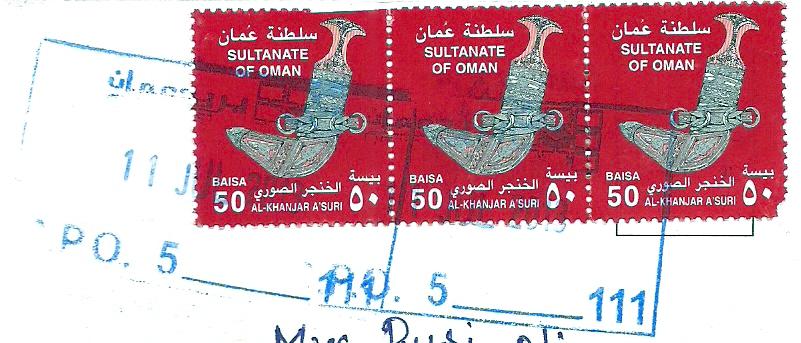
Oman - Omani Woman
Sultanate of Oman - Omani woman.
Sent by Adil from Muscat, Oman.
Terima kasih banyak-banyak (thank you very much).
U.S.A. - North Carolina
NORTH CAROLINA FUN FACTS
Capital : Raleigh
Area : 48,843 square miles
Statehood : Nov. 21, 1789 (12th state admitted)
Mottos : Esse quam videri (to be rather than to seem)
Song : "The Old North State"
State Bird : Cardinal
State Tree : Long Leaf Pine
State Flower : Dogwood
Sent by Tiffany from Raleigh, North Carolina, USA.
U.S.A. - Indiana - State Bird
Cardinal - Indiana State Bird.
Sent by Sandy from Indiana, USA.
Indiana designated the northern cardinal (Richmondena Cardinalis Cardinalis) as official state bird in 1933.
One of America's favorite backyard birds, cardinals are distinctive in appearance and song - known for their "cheer cheer cheer," "whit-chew whit-chew" and "purty purty purty" whistles.
Male cardinals are a brilliant scarlet red, females a buffy brown with reddish wings - both have a jet -black mask, pronounced crest, and heavy bill. The cardinal sings nearly year-round, and the male aggressively defends his 4-acre territory (male cardinals have been seen attacking small red objects mistaken as other males). (Source)
Malaysia - Selangor Darul Ehsan - Shah Alam
SULTAN SALAHUDDIN ABDUL AZIZ SHAH
This is the main administrative centre of the state of Selangor. Located right in the middle of the new township of Shah Alam. An impressive landmark visible along the Federal Highway.
This is an old postcard. Since 1988, the most visible landmark of Shah Alam has been Sultan Salahuddin Abdul Aziz Shah Mosque (also known as Blue Mosque), located not far away from this building. I personally got the stamp of Selangor postmarked by the Shah Alam Post Office today, about 15km from my residential area.
Shah Alam /ʃɑː ˈɑːləm/ is the state capital of Selangor, Malaysia and situated within the Petaling District and a small portion of the neighbouring Klang District. It is located about 25 kilometres (16 mi) west of the country's capital, Kuala Lumpur. Shah Alam replaced Kuala Lumpur as the capital city of the state of Selangor in 1978 due to Kuala Lumpur's incorporation into a Federal Territory in 1974. Shah Alam was the first planned city in Malaysia after independence from Britain in 1957.
Malaysia grew rapidly after its independence in 1957 under the "Father of Modernisation", the second Prime Minister of Malaysia, Allahyarham Tun Abdul Razak Hussein. Shah Alam was once known as Sungai Renggam and was noted for its rubber and oil palm estates. Later, the same area was identified as Batu Tiga prior to Malaysian independence, and has been a centre of rubber and palm oil trade for centuries. The Sungai Renggam Plantation was earmarked for the development of a township by the Selangor government in 1963, and under the recommendations of V. Antolic, a town planning advisor from the United Nations, chose the present site strategically located between Kuala Lumpur and Port Klang.
Its current name was chosen by the then state Sultan of Selangor, Sultan Salahuddin Abdul Aziz Shah, after his late father Sultan Alam Shah. Many other monuments, buildings and even a street are named after the late Sultan. Shah Alam was opened in 1963 with the purpose of making it the administrative centre of Selangor once Kuala Lumpur was made a Federal District on 1 February 1974. With the consent of 8th Duli Yang Maha Mulia Sultan of Selangor, Almarhum Sultan Salahuddin Abdul Aziz Shah Al-Haj, Shah Alam was proclaimed the capital of Selangor on 7 December 1978 with an area of 41.68 square km, and administrated by a municipal council. Shah Alam had encountered several processes of extending its areas and the last was on 1 January 1997. Through the Gazette Plan 1190, Shah Alam was extended to 293 square km.
Shah Alam was granted city status on 10 October 2000 with Dato' Haji Abu Sujak Haji Mahmud as the first mayor. He recently served as deputy Menteri Besar, or Chief Minister of Selangor. Abu Sujak declared the vision of making Shah Alam a modern city with a unique identity of "Bandaraya Melayu" or Malay City, showcasing the achievements of the Malay race in all sectors. In line with this identity, Shah Alam was declared the first city in the world with no entertainment outlets to avoid any vice activities. (read further)
Morocco - Medina of Marrakesh
Marrakesh.
Sent by Omar from Tafraoute, Morocco.
The capital of the Almoravids and the Almohads played a decisive role in the development of medieval planning. Marrakesh (which gave its name to the Moroccan Empire) is the textbook example of a large Islamic capital in the Western world. With its maze of narrow streets, houses, souks (markets), traditional crafts and trade activities, and its medina, this ancient settlement is an outstanding example of a vibrant historic city.
Marrakesh was founded in 1071-72 by Youssef ben Tachfin on the site of the camp where Abou Bekr had left him in charge. From that point forward, Marrakesh was no longer an occasional stopping place for the Almoravids. It became the true capital of these conquering nomads who succeeded in stretching their empire from the Sahara to the Ebro and from the Atlantic to Kabylia.
The original layout of the medina dates back to the Almoravid period from which there still remain various monumental vestiges (ruins of the so-called Abou Bekr Kasbah, Youssef ben Tachfin Mosque and Ali ben Youssef Palace, not far from the Koutoubia, the pool and the 'Koubba' of Ali ben Youssef Mosque which were discovered in 1955, Bab Aylan gate, etc.). In essence it is an adaptation of the older urban model of Marrakesh.
The walls of the medina were built in 1126-27 following the order given by Ali ben Youssef. The planting of the palm groves, which at the present still cover a surface area of roughly 13,000 ha to the east of the city, has also been credited to the Almoravids. When in 1147 this dynasty bowed to the attacks of the Almohads led by Abdel Mou'men, the task of purification that was carried out did not spare the monuments which, for the most part, were destroyed by the victors. Nevertheless Marrakesh remained the capital. Under the Almohad rulers (1147-1269), Marrakesh experienced new and unprecedented prosperity.
Between 1147 and 1158, Abd el Mou'men had the Koutoubia Mosque built upon the ruins of the Almoravid foundations. Its incomparable minaret, key monument of Muslim architecture, is one of the major features of the cityscape and is the actual symbol of the city. The ruler's successors, Abou Yacoub Youssef and especially Yacoub el Mansour, were the ones who truly renovated the capital. They built new quarters, extended the city wall, fortified the Kasbah (1185-90) which was a prolongation of the city to the south with its own ramparts and gates (Bab Agnaou, Bab Robb), its mosque, palace, market, hospital, parade-ground and gardens. These leaders strengthened their control over their domains by planting crops (Menara to the west) and by civil engineering achievements, the best known of which are the Tensift Bridge and the kettara network in the palm groves.
The decline of Marrakesh, which began during the conquest of the city by the Merinids in 1269, never went beyond the point of no return, as is illustrated by a number of non-negligible constructions (Ben Salih Mosque and minaret, not long after 1321). The rebirth of the capital under the Saadian rulers (1510-1669) led to a new blossoming of the arts, as borne out by the ruins of the El Badi Palace and the Saadian tombs, whose precious architecture is isolated from the rest of the Kasbah by a wall. Some of the elements making up these refined and sumptuous constructions came from afar, such as the marble columns from Carrara which Montaigne observed being cut in Tuscany 'for the king of Morocco in Berberia'. Also dating back to the Saadian period is the restoration of the Ben Youssef Madrasa and the building of several fountains decorated with gypsum work and woodwork (Mouassine, Chrob ou Chouf and Bab Doukkala Fountains).
Under the reign of the Alawite dynasty, Marrakesh, the temporary capital, was graced with a new mosque,madrasas, palaces and residences harmoniously integrated into the homogeneous unit of the old town, which was surrounded by 10 km of clay and lime and beaten-cob ramparts. Beyond the walls were the great traditional areas of greenery: the palm groves, the Menara and, to the south, the Agdal gardens that were redesigned by Moulay Abd er Rahman (1822-59). (Source)
Morocco - Casablanca - Hassan II Mosque
Sent by Omar from Tafraoute, Morocco.
The Hassan II Mosque or Grande Mosquée Hassan II (Arabic: مسجد الحسن الثاني; nickname: "Casablanca Hajj" (colloquial, microblogging and social networking language) is a mosque in Casablanca, Morocco. It is the largest mosque in the country and the 7th largest in the world. Its minaret is the world's tallest at 210 metres (689 ft). Completed in 1993, it was designed by Michel Pinseau and built by Bouygues. The minaret is 60 stories high topped by a laser, the light from which is directed towards Mecca. The mosque stands on a promontory looking out to the Atlantic Ocean, the sea bed being visible through the glass floor of the building's hall. The walls are of hand-crafted marble and the roof is retractable. A maximum of 105,000 worshippers can gather together for prayer: 25,000 inside the mosque hall and another 80,000 on the mosque's outside grounds. (read further)
Morocco - Medina of Essaouira (formerly Mogador)
Sent by Omar from Tafraoute, Morocco.
Essaouira is an outstanding and well-preserved example of a late 18th-century European fortified seaport town translated to a North African context. With the opening up of Morocco to the rest of the world in the later 17th century, the town was laid out by a French architect who had been profoundly influenced by the work of Vauban at Saint-Malo. It has retained its European appearance to a substantial extent.
Since its foundation in the 18th century and until the beginning of the 20th century, Essaouira has played a fundamental role as an international trading port between Morocco and the rest of the world. A number of consulates and traders from different countries were established there. Essaouira is a leading example of building inspired by European architecture, a town unique by virtue of its design: it was created in conformity with a predetermined plan, the Cornut plan. Since the beginning, the medina of Essaouira has been a major place for the peaceable coming together of the architectural and town-planning models of Europe and of Morocco itself. In this way a symbiosis was achieved between building techniques from Morocco and elsewhere that gave birth to some unique architectural masterpieces: the Sqalas of the port and of the medina, the Bab Marrakesh bastion, the water gate, mosques, synagogues, churches, etc.
Archaeological excavations have shown that the site of Essaouira was originally a Phoenician trading settlement, followed by Cretans, Greeks and Romans. The earlier name of Mogador derives from Migdol, meaning a small fort. In 1506 it was to become the site of a Portuguese fortress, but this was abandoned soon after.
The present town dates from 1765, when the Alawite Sultan Sidi Mohamed ben Abdellah decided to build a port that would open Morocco up to the outside world and assist in developing commercial relations with Europe. He sought the help of Nicholas Théodore Cornut, a surveyor specialist in military fortifications from Avignon, who was strongly influenced by Vauban's defences at Saint-Malo. He partially dismantled the Portuguese fortress to build an esplanade with a row of cannons. The entire town was enclosed by a defensive wall on the Vauban model. In order to control maritime trade, he closed the southern coast to European traders, obliging the European consuls at Safi, Agadir and Rabat to move to Mogador, where all southern mercantile activities were concentrated. The new port became one of the country's main commercial centres; it was called the 'port of Timbuktu' as it was the destination of caravans bringing a variety of products (including slaves) from black Africa. The town was made up of three separate districts. The kasbah comprised the old administrative district. The medina was crossed by two main axial streets, one running from Bab Doukalla to the harbour and the other from Bab Marrakesh to the sea. At their intersection there were four markets, for fish, spices, grain and general goods respectively.
The Mellah is the Jewish quarter; it played a very important role in the history of the town, as the sultan made use of this community to establish relations with Europe and to organize commercial activities with them. The main features of the town are: the ramparts, most of the northern section of which survives; the town gates, especially the ornamental Sea Gate (1170-71); the bastions and forts (borjs ), especially the Sqala of the Port and the Sqala of the Medina and the Bastion of Bab Marrakesh; the kasbah , which was originally the seat of power and the military garrison, and is now integrated into the town proper; the Mellah (Jewish quarter), which retains many of its original special features; the prison, located on the offshore island (now a refuge for rare birds, such as hawks); the many mosques, in a characteristic style, and especially the mosques of the Casbah and Ben Yossef; the synagogues (in particular the 19th-century synagogue of Simon Attias), which preserve the dynamism of the Jewish inhabitants; the late 18th-century Portuguese church; the Dar-Sultan (old Royal Palace); and the very attractive private houses. (Source)
Thursday, July 18, 2013
Cook Islands - Aitutaki (6)
Aitutaki - jewel of the Cook Islands. An island of unsurpassed natural beauty.
Sent by Kimiora from Aitutaki, Cook Islands.
Cook Islands - Aitutaki (4)
LAGOON WALK, AITUTAKI,COOK ISLANDS
White sandy beaches and crystal clear water near One Foot Island, Aitutaki,Cook Islands.
Sent by Kimiora from Aitutaki, Cook Islands.
Cook Islands - Aitutaki (3)
EVENING, AITUTAKI LAGOON, COOK ISLANDS
The delicate evening light, reflected in the calm waters of the lagoon,lend an air of tranquillity to the day's end. This is the time for a quiet evening stroll or perhaps just to sit on the beach and view a canoe gliding by.
Sent by Kimiora from Aitutaki, Cook Islands.
Cook Islands - Aitutaki (2)
SUNSET, AITUTAKI, COOK ISLANDS
Some of the most lasting memories treasured by the visitor to the Cook Islands are the brilliant tropical sunsets outlining the coastal coconut palms.
Sent by Kimiora from Aitutaki, Cook Islands.
Cook Islands - Aitutaki (1)
Cooling shade and colourful kayaks at O'otu Beach, Aitutaki.
Sent by Kimiora from Aitutaki, Cook Islands.
Aitutaki, also traditionally known as Araura, Ararau and Utataki, is one of the Cook Islands, north of Rarotonga. It has a population of approximately 2,000. Aitutaki is the second most visited island of the Cook Islands. The main village is Arutanga (Arutunga) on the west side.
Aitutaki is an "almost atoll". It has a maximum elevation of approximately 123 metres with the hill known as Maunga Pu close to its northernmost point. The land area of the atoll is 18.05 km², of which the main island occupies 16.8 km². The Ootu Peninsula, protruding east from the main island in a southerly direction along the eastern rim of the reef, takes up 1.75 km² out of these 16.8 km² for the main island. For the lagoon, area figures between 50 and 74 km² are found. Satellite image measurement suggests that the larger figure also includes the reef flat, which is commonly not considered part of a lagoon.
The barrier reef that forms the basis of Aitutaki is roughly the shape of an equilateral triangle with sides 12 kilometres in length. The southern edge of the triangle is almost totally below the surface of the ocean, and the eastern side is composed of a string of small islands (including Mangere, Akaiami, and Tekopua).
The western side of the atoll contains many of Aitutaki's important features including a boat passage through the barrier reef allowing for anchorage close to shore at Arutanga. Towards the south of the side is a small break in the barrier reef, allowing access for small boats to the lagoon which covers most of the southern part of the triangle. Further to the north is the bulk of the main island. Its fertile volcanic soil provide tropical fruits and vegetables. Two of Aitutaki's 15 islets (motus) are also volcanic. The rest are made of coral.
Aitutaki Airport is located close to the triangle's northern point. There is an area suitable to land flying boats in the southeastern part of the lagoon. (read further)
Cook Islands
Two beautiful little islands lie in the middle of Aitutaki's pristine lagoon. This view of Rapota is from Motu Rakau, where the TV series Survivor and Shipwrecked were both filmed.
Sent by Kimiora from Aitutaki, Cook Islands.
The Cook Islands (Cook Islands Māori: Kūki 'Āirani) is a parliamentary democracy in the South Pacific Ocean in free association with New Zealand. It comprises 15 small islands whose total land area is 240 square kilometres (92.7 sq mi). The Cook Islands' Exclusive Economic Zone (EEZ), however, covers 1,800,000 square kilometres (690,000 sq mi) of ocean.
The Cook Islands' defence and foreign affairs are the responsibility of New Zealand, in consultation with the Cook Islands. In recent times, the Cook Islands have adopted an increasingly independent foreign policy. Although Cook Islanders are citizens of New Zealand, they have the status of Cook Islands nationals, which is not given to other New Zealand citizens.
The Cook Islands' main population centres are on the island of Rarotonga (14,153 in 2006), where there is an international airport. There is a much larger population of Cook Islanders in New Zealand, particularly the North Island. In the 2006 census, 58,008 self-identified as being of ethnic Cook Islands Māori descent.
With about 100,000 visitors travelling to the islands in the 2010–11 financial year, tourism is the country's main industry, and the leading element of the economy, far ahead of offshore banking, pearls, and marine and fruit exports. (read further)
Falkland Islands - Stanley (1)
First impressions along the Harbour Edge.
Sent by Vanessa from Stanley, Falkland Islands.
Stanley /ˈstænli/ (also known as Port Stanley) is the capital of the Falkland Islands. It is located on the island of East Falkland, on a north-facing slope in one of the wettest parts of the islands. At the 2006 census, the town had a population of 2,115. Stanley is represented by five members of the Legislative Assembly of the Falkland Islands, currently Jan Cheek, Barry Elsby, Dick Sawle, Gavin Short and Mike Summers.
Today, Stanley is the main shopping centre on the islands and the hub of East Falkland's road network. Attractions include the Falkland Islands Museum, Government House – built in 1845 and home to the Governor of the Falkland Islands (currently Nigel Haywood) – and a golf course, as well as a whalebone arch, a totem pole, several war memorials and the shipwrecks in its harbour. The Falkland Islands Company owns several shops and a hotel. Stanley has four pubs, eleven hotels & guesthouses, three restaurants, a fish and chip shop and the main tourist office. There are three churches including the Anglican Christ Church Cathedral, the southernmost cathedral in the world. A bomb disposal unit in the town is a legacy of the Falklands War.
The town hall serves as a post office, philatelic bureau, law court and dance hall. The police station also contains the islands' only prison, with a capacity of thirteen in the cells. (read further)
Montenegro - Durmitor National Park
Montenegro - Durmitor
Sent by Tina of Slovenia who visited Durmitor National Park.
Durmitor National Park comprises Mount Durmitor plateau and the valley formed by the canyon of the River Tara, incorporating three major geomorphologic features: canyons, mountains and plateaux. Because of its geographical location and range in altitude, the park is under the influence of both Mediterranean and alpine microclimates, which has resulted in an exceptional range of species.
Geologically, Durmitor and Tara canyons are made up of rocky massifs of the Mesozoic era (from the Lower Triassic to the Upper Cretaceous), Tertiary and Quaternary periods. The dominant features are the limestone formations of the Middle and Upper Triassic, the Upper Jurassic and the Upper Cretaceous, especially the so-called Durmitorean flysch. The River Tara, one of the last wild rivers in Europe, has pure, clear waters, a gorge 1,300 m deep and notable floristic and faunistic diversity. The 16 glacial lakes of the Durmitor and the canyons of the Tara, Susica and Draga rivers were formed during the Quaternary period, following the sudden thaw of the snow and the formation of glaciers on the Durmitor and neighbouring mountains. The waters of the largest lake, Black Lake, feed two separate river basins: the River Tara, and underground through the Durmitor Massif, the River Komarnica or Piva. There are numerous examples of weathering processes, rock shapes and land features characteristic of karstic erosion, fluvial erosion and glacial erosion.
Vegetation zones include deciduous forest, coniferous forest and subalpine zones. The dominant species include Scots pine, Norway pine, silver fir, beech, occasional birch, mugo pine and juniper. The park supports a rich karstic flora with many rare and endemic species. There are 37 taxa endemic to the area and six specific to Durmitor. The park contains one of the last virgin black pine forests in Europe, on soils that would usually develop beech woodland.
The Tara and its tributaries, as well as the lakes, contain a large number of salmonidae. Forest fauna includes brown bear, wolf, wild boar, wild cat, chamois, various species of eagle, capercaillie, black grouse and rock partridge. (Source)
Monday, July 15, 2013
Spain - Balearic Islands - Menorca
Sent by Valérie from Belgium who visited Menorca.
Minorca or Menorca (Catalan: Menorca [məˈnɔrkə]; Spanish: Menorca [meˈnorka]; from Latin: Insula Minor, later Minorica "minor island") is one of the Balearic Islands located in the Mediterranean Sea belonging to Spain. Its name derives from its size, contrasting it with nearby Majorca.
Minorca has a population of approximately 94,383 (2010). It is located 39°47' to 40°00'N, 3°52' to 4°24'E. Its highest point, called El Toro or Monte Toro, is 358 metres (1,175 ft) above sea level. (read further)
U.S.A. - Nebraska - Mapcard
Nebraska became the 37th state admitted to the Union on March 1, 1867. Known as the "Cornhusker State," Nebraska ranks 15th in size among all 50 states, and supports a great diversity of industry and agriculture.
Sent by Mallory from Omaha, Nebraska, USA.
Nebraska /nəˈbræskə/ is a state that lies in both the Great Plains and the Midwestern United States. Its state capital is Lincoln. Its largest city is Omaha, which is on the Missouri River.
The state is crossed by many historic trails, but it was the California Gold Rush that first brought large numbers of non-indigenous settlers to the area. Nebraska became a state in 1867. (read further)
Subscribe to:
Comments (Atom)