Translate

Monday, June 23, 2025

USA - Alaska - Anchorage


Greetings from Anchorage, Alaska.
Sent by Erica from Anchorage, Alaska, USA.
Anchorage, officially the Municipality of Anchorage, is the most populous city in the U.S. state of Alaska. With a population of 291,247 at the 2020 census,] it contains nearly 40 percent of the state's population. The Anchorage metropolitan area, which includes Anchorage and the neighboring Matanuska-Susitna Borough, had a population of 398,328 in 2020, accounting for more than half the state's population. At 1,706 sq mi (4,420 km2) of land area, the city is the fourth-largest by area in the U.S.
Anchorage is in Southcentral Alaska, at the terminus of the Cook Inlet, on a peninsula formed by the Knik Arm to the north and the Turnagain Arm to the south. First settled as a tent city near the mouth of Ship Creek in 1915 when construction on the Alaska Railroad began, Anchorage was incorporated as a city in November 1920. In September 1975, the City of Anchorage merged with the Greater Anchorage Area Borough, creating the Municipality of Anchorage. The municipal city limits span 1,961.1 sq mi (5,079.2 km2), encompassing the urban core, a joint military base, several outlying communities, and almost all of Chugach State Park. Because of this, less than 10 percent of the Municipality (or Muni) is populated, with the highest concentration of people in the 100 square-mile area that makes up the city proper, on a promontory at the headwaters of the inlet, commonly called Anchorage, the City of Anchorage, or the Anchorage Bowl (read more).

Hong Kong - Hong Kong Museum of Art


Hong Kong Museum of Art
Sent by Ah Si Lian from Hong Kong.
The Hong Kong Museum of Art (HKMoA) is the first and one of the main art museums of Hong Kong, located in located in Tsim Sha Tsui, Kowloon, near the Victoria Harbour waterfront, providing a scenic view of Hong Kong’s skyline. It is a public museum managed by the Leisure and Cultural Services Department of the Hong Kong Government. HKMoA has an art collection of over 17,000 items, dedicated to preserving and showcasing Chinese and international art. Admission is free for permanent exhibitions. Its rival is the non-government-managed Hong Kong Arts Centre. These two museums are considered to be the top two art museums in Hong Kong that dictate the discourse of art in Hong Kong.
It has an extended branch, the Flagstaff House Museum of Tea Ware, at the Hong Kong Park in Central (read more).

Sri Lanka - Elephants at Pinnawala


Elephants at Pinnawala.

Sent by Malika from Colombo, Sri Lanka.

Pinnawala Elephant Orphanage (Sinhala: පින්නවල අලි අනාථාගාරය), is a captive breeding and conservation institute for wild Asian elephants located at Pinnawala village, 13 km (8.1 mi) northeast of Kegalle town in Sabaragamuwa Province of Sri Lanka. Pinnawala has the largest herd of captive elephants in the world. In 2023, there were 71 elephants, including 30 males and 41 females from 3 generations, living in Pinnawala.

The orphanage was founded to care and protect the many orphaned unweaned wild elephants found wandering in and near the forests of Sri Lanka. It was established in 1975 by the Sri Lanka Department of Wildlife Conservation (DWC).

On 31 August 2021, a 25 year old elephant named Surangi gave birth to twin male baby elephants at the orphanage. It also marked the first instance of the birth of twin elephants in Sri Lanka after a gap of 80 years since 1941 (read more).
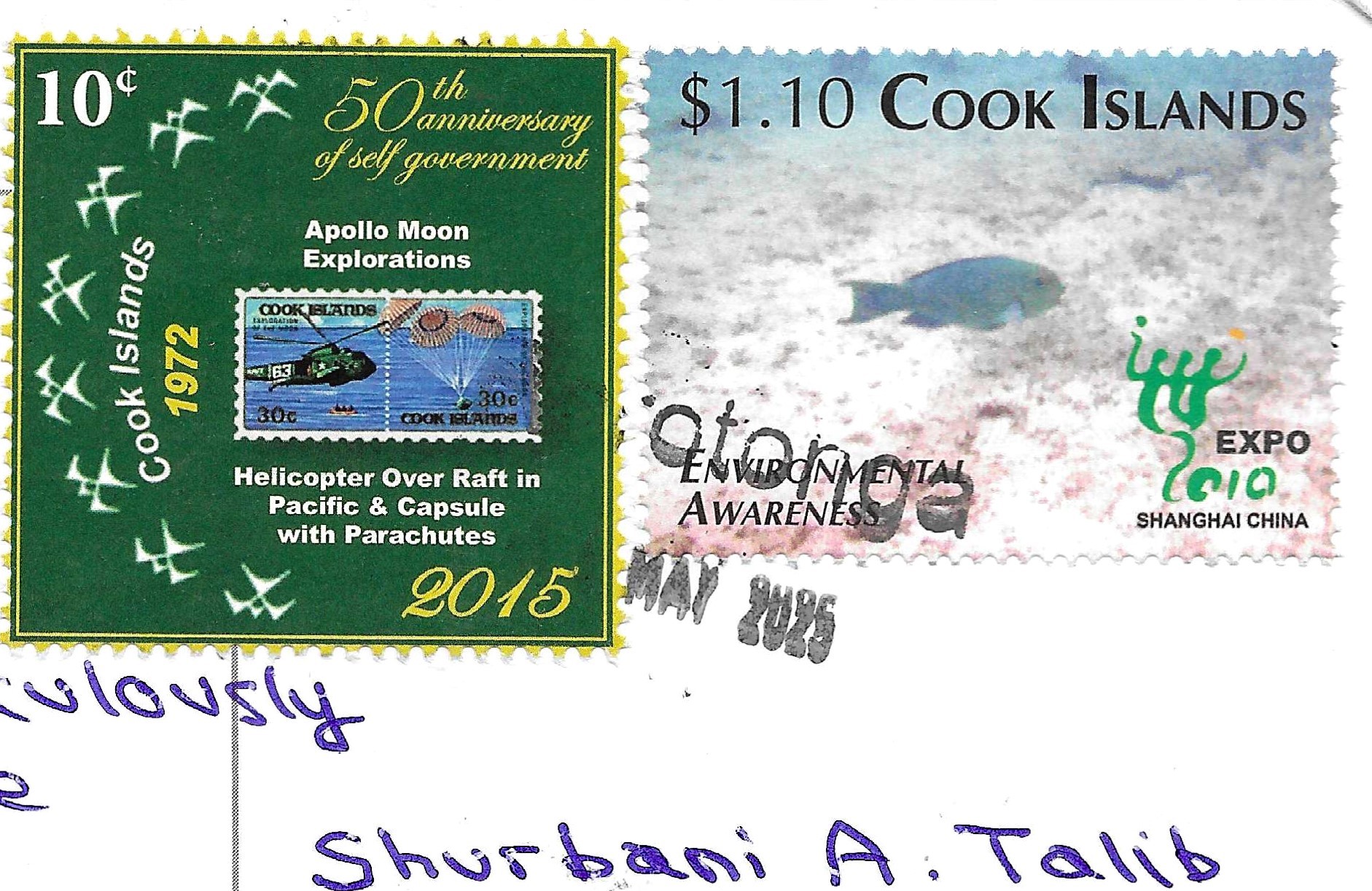

Denmark - Monarchy of Denmark


Crown Princess Mary (born 1972)
Frederik Prince of Demark, Crown Prince (born 1968)

Sent by Linda from Hasselager, Denmark.

The monarchy of Denmark is a constitutional institution and a historic office of the Kingdom of Denmark. The Kingdom includes Denmark proper and the autonomous territories of the Faroe Islands and Greenland. The Kingdom of Denmark was already consolidated in the 8th century, whose rulers are consistently referred to in Frankish sources (and in some late Frisian sources) as "kings" (reges). Under the rule of King Gudfred in 804 the Kingdom may have included all the major provinces of medieval Denmark.

The current unified Kingdom of Denmark was founded or re-united by the Viking kings Gorm the Old and Harald Bluetooth in the 10th century. Originally an elective monarchy, it became hereditary only in the 17th century during the reign of Frederick III. A decisive transition to a constitutional monarchy occurred in 1849 with the writing of the first democratic constitution, replacing the vast majority of the old absolutist constitution. The current Royal House is a branch of the ducal House of Glücksburg, originally from Schleswig-Holstein in modern-day Germany, the House of Glücksburg itself being a collateral branch of the House of Oldenburg. The House of Glücksburg also produced the monarchs of Norway, of the United Kingdom and the former monarch of Greece in the direct male line (read more).

Togo - Multiviews of Togo


Multiviews of Togo.

Sent by Taouvik Boukari of Togo.


Togo - Illustration of Togo Map


An illustration of Togo map.

Sent by Taouvik Boukari from Togo.

Togo, officially the Togolese Republic, is a country in West Africa. It is bordered by Ghana to the westBenin to the east and Burkina Faso to the north. It is one of the least developed countries and extends south to the Gulf of Guinea, where its capitalLomé, is located. It is a small, tropical country, spanning 57,000 square kilometres (22,000 square miles) with a population of approximately 8 million, and it has a width of less than 115 km (71 mi) between Ghana and its eastern neighbour Benin (read more).


India - Himachal Pradesh - Kee Monastery in Spiti (2)


KEE MONASTERY, Spiti, India.

One of the three postcards sent by stranger from the highest Post Office in the world, in Hikkim in Himachal Pradesh. Unfortunetely the postcard is not stamped and cancelled. The three postcards were sent in an envelope.


India - Himachal Pradesh - Kee Monastery in Spiti (1)


KEE MONASTERY, Spiti.

One of the three postcards sent by stranger from the highest Post Office in the world, in Hikkim in Himachal Pradesh. Unfortunetely the postcard is not stamped and cancelled. The three postcards were sent in an envelope.

Kye Gompa (Tibetan: དཀྱིལ་དགོན་, Wylie: dkyil dgon; also spelled KyiKiKey, or Kee; pronounced like the English word key) is a Tibetan Buddhist monastery of the Gelugpa sect located on top of a hill at an altitude of 4,166 metres (13,668 ft) above sea level, close to the Spiti River, in the Spiti Valley of Himachal Pradesh, Lahaul and Spiti district, India.

It is the largest monastery of the Spiti Valley and a religious training centre for lamas. It reportedly had 100 monks in 1855.

The monastery is dedicated to Lochen Tulku, the 24th reincarnation of the great translator Lotsawa Rinchen Zangpo.

It is about 12 km (7.5 mi) north of Kaza and 210 km (130 mi) from Manali by road (read more).

India - Himachal Pradesh - Tabo Monastery in Spiti


TABO MONASTERY, Spiti.

One of the three postcards sent by stranger from the highest Post Office in the world, in Hikkim in Himachal Pradesh. Unfortunetely the postcard is not stamped and cancelled. The three postcards were sent in an envelope.

Tabo Monastery (or Tabo Chos-Khor Monastery) is located in the Tabo village of Spiti ValleyHimachal Pradesh, northern India. It was founded in 996 CE in the Tibetan year of the Fire Ape by the Tibetan Buddhist lotsawa (translator) Rinchen Zangpo (Mahauru Ramabhadra), on behalf of the king of western Himalayan Kingdom of GugeYeshe-Ö. Tabo is noted for being the oldest continuously operating Buddhist enclave in both India and the Himalayas. A large number of frescoes displayed on its walls depict tales from the Buddhist pantheon. There are many priceless collections of thankas (scroll paintings), manuscripts, well-preserved statues, frescos and extensive murals which cover almost every wall. The monastery is in need of refurbishing as the wooden structures are aging and the thanka scroll paintings are fading. After the earthquake of 1975, the monastery was rebuilt, and in 1983 a new Du-kang or Assembly Hall was constructed. It is here that the 14th Dalai Lama held the Kalachakra ceremonies in 1983 and 1996. The monastery is protected by the Archaeological Survey of India (ASI) as a national historic treasure of India (read more).


uncancelled stamps on the envelope

Portugal - Tomar


Saint John the Baptist Church
Republic Square
TOMAR
Portugal
Sent by Tracy from Tomar, Portugal.

Tomar (Portuguese pronunciation: [tuˈmaɾ]), also known in English as Thomar (the ancient name of Tomar), is a Portuguese city and a municipality in the historical Ribatejo Portuguese province, and in Santarém district. The town proper has a population of about 20,000. The municipality population in 2011 was 40,677, in an area of 351.20 km2 (135.60 sq mi).

The town of Tomar was created inside the walls of the Convento de Cristo, constructed under the orders of Gualdim de Pais, the fourth Grand Master of the Knights Templar in Portugal in the late 12th century.

Tomar was the last Templar town to be commissioned for construction and one of Portugal's historical jewels. The town was especially important in the 15th century when it was a center of Portuguese overseas expansion under Henry the Navigator, the Grand Master of the Order of Christ, successor organization to the Knights Templar in Portugal (read more).


Malaysia - Negeri Sembilan - Seremban


Seremban, Negeri Sembilan.
Sent by Afiza from Negeri Sembilan, Malaysia. Terima kasih banyak-banyak (thank you very much).
Seremban (Negeri Sembilan Malay: Somban) is a city in the Seremban District and the capital of the state of Negeri Sembilan in Peninsular Malaysia. The city's administration is run by the Seremban City Council.
Seremban gained its city status on 20 January 2020. Covering an area of 959 km², Seremban's population is 681,541 as of 2020, making it the tenth largest city in Malaysia and the fifth most populous state capital behind Johor Bahru, Shah Alam, George Town and Ipoh. It is part of the Greater Kuala Lumpur area, being situated approximately 55 kilometres south of Kuala Lumpur and 37 kilometres south of the federal administrative capital of Putrajaya. Since 2015, Seremban has been the major anchor city of the Malaysia Vision Valley, Negeri Sembilan's main special economic zone spanning the state's western half (read more).

Friday, June 20, 2025

Mauritius - Typical Landscapes


MAURITIUS
Typical Landscapes

Sent by Tasneem from Phoenix in Mauritius.


Moldova - Pressing of Grapes For Making Fine Wine


Old pressing of grapes for making fine wine.

Sent by Olga of Latvia from Chișinău, Moldova.

Moldova has a well-established wine industry. With a production of around 2 million hectolitres of wine (as of 2018), it is the 11th largest European wine-producing country. Moldova has a vineyard area of 148,500 hectares (367,000 acres) of which 107,800 hectares (266,000 acres) are used for commercial production. The remaining 40,700 hectares (101,000 acres) are vineyards planted in villages around the houses used to make home-made wine. Many families have their own recipes and strands of grapes that have been passed down through the generations. There are 3 historical wine regions: Valul lui Traian (south west), Stefan Voda (south east) and Codru (center), destined for the production of wines with protected geographic indication.
In 2022 the majority of wines were exported, being sent to 75 countries, with 60% of wine produced being exported to European Union countries (read more).


Cook Islands - One Foot Island (Tapuaetai)


One Foot Island (Tapuaetai) at Aitutaki. A palm fringed beach, a turquoise lagoon, a time to remember.
Sent by Allison during her holiday in Cook Islands.
Tapuaetai (tapuae: footprint; ta'i: one), or "One Foot Island", is one of 22 islands in the Aitutaki atoll of the Cook Islands. It is located on the southeastern perimeter of Aitutaki Lagoon immediately to the southwest of the larger island of Tekopua, seven kilometres to the east of the main island of Aitutaki. The island is 570m long and up to 210m wide, with an average elevation of 1.5m above sea level.
One Foot Island was awarded "Australasia's Leading Beach" at the World Travel Awards held in Sydney in June 2008 (read more).

Denmark - Copenhagen


The Town Hall Square. The Little Mermaid. Rosenborg Castle. Cityvie. Nyhavn. Christianshavn. The Round Tower. Ameliehaven. The Royal Life Guard. Tivoli.

Sent by David (reddit) from his vacation in Denmark.

Copenhagen (Danish: København [kʰøpm̩ˈhɑwˀn]) is the capital and most populous city of Denmark, with a population of 1.4 million in the urban area. The city is situated on the islands of Zealand and Amager, separated from Malmö, Sweden, by the Øresund strait. The Øresund Bridge connects the two cities by rail and road.

Originally a Viking fishing village established in the 10th century in the vicinity of what is now Gammel Strand, Copenhagen became the capital of Denmark in the early 15th century. During the 16th century, the city served as the de facto capital of the Kalmar Union and the seat of the Union's monarchy, which governed most of the modern-day Nordic region as part of a Danish confederation with Sweden and Norway. The city flourished as the cultural and economic centre of Scandinavia during the Renaissance. By the 17th century, it had become a regional centre of power, serving as the heart of the Danish government and military. During the 18th century, Copenhagen suffered from a devastating plague outbreak and urban conflagrations. Major redevelopment efforts included the construction of the prestigious district of Frederiksstaden and the establishment of cultural institutions such as the Royal Theatre and the Royal Academy of Fine Arts. The city also became the centre of the Danish slave trade during this period. In 1807, the city was bombarded by a British fleet during the Napoleonic Wars, before the Danish Golden Age brought a Neoclassical look to Copenhagen's architecture. After World War II, the Finger Plan fostered the development of housing and businesses along the five urban railway routes emanating from the city centre (read more).


South Korea - Changdeokgung Palace Complex (3)


UNESCO World Heritage of Rep. of KOREA
In the early 15th century, the King Taejong ordered the construction of a new palace at an auspicious site. A Bureau of Palace  Construction was set up to create the complex, consisting of a number of official and residential buildings set in a garden that was cleverly adapted to the uneven topography of a 58-ha site. The result is an exceptional example of Far Eastern palace architecture and design, blending harmoniously with its surrounding landscape.

Sent by Seokyoung from Ulsan, South Korea.

Constructed in the 15th century during the Joseon Dynasty, the Changdeokgung Palace Complex occupies a 57.9 ha site in Jongno-gu, in northern Seoul at the foot of Ungbong Peak of Mount Baegaksan, the main geomantic guardian mountain.

Changdeokgung is an exceptional example of official and residential buildings that were integrated into and harmonized with their natural setting. The complex was originally built as a secondary palace to the main palace of Gyeongbokgung, differentiated from it in its purpose and spatial layout within the capital. Situated at the foot of a mountain range, it was designed to embrace the topography in accordance with pungsu principles, by placing the palace structures to the south and incorporating an extensive rear garden to the north called Biwon, the Secret Garden. Adaptation to the natural terrain distinguished Changdeokgung from conventional palace architecture (read more).


South Korea - Jeju Volcanic Island and Lava Tubes


Jeju Volcanic Island and Lava Tubes (2007)

Jeju Volcanic Island and Lava Tubes together comprises three sites that make up 18,846 ha. It includes Geomunoreum, regarded as the finest lava tube system of caves anywhere, with its multicoloured carbonate roofs and floors, and dark-coloured lava walls; the fortress-like Seongsan Ilchulbong tuff cone, rising out of the ocean, a dramatic landscape; and Mount Haila, the highest in Korea, with its waterfalls, multi-shaped rock formations, and lake-filled crater. The site, is outstanding aesthetic beauty, also bears testimony to the history of the planet, it features and processes.

Sent by Soyoung from Incheon, South Korea.

Jeju Volcanic Island and Lava Tubes is a coherent serial property comprising three components.  The unequalled quality of the Geomunoreum lava tube system and the exhibition of diverse and accessible volcanic features in the other two components demonstrate a distinctive and important contribution to the understanding of global volcanism (read more).


Italy - Emilia-Romagna - Parma


PARMA
The Cathedral and Baptistery

Sent by Giada-Alfieri from Parma, Italy.

Parma (Italian: [ˈparma] ParmigianoPärma [ˈpɛːʁmɐ]) is a city in the northern Italian region of Emilia-Romagna known for its architecturemusic, art, prosciutto (ham), cheese and surrounding countryside. With a population of 198,986 inhabitants as of 2025, Parma is the second most populous city in Emilia-Romagna after Bologna, the region's capital. The city is home to the University of Parma, one of the oldest universities in the world. Parma is divided into two parts by the stream of the same name. The district on the west side of the river is Oltretorrente, meaning The other side of the stream. Parma's Etruscan name was adapted by Romans to describe the round shield called Parma (read more).

Malaysia - Johor - Clock Tower


Muar
is the official Royal Town (or "Empress Town") of Johor.
One of the tourist attractions is the British colonial architecture Clock Tower which is standing at the entrance of the town.

Sent by Nurul from Muar, Johore.

Muar (Muarian dialect: Muo) or Bandar Maharani is a historical town and the capital of Muar District, Johor, Malaysia. It is one of the most popular tourist attractions in Malaysia to be visited and explored for its food, coffee and historical prewar buildings. On the 5 of February 2012, Muar was declared as the royal town of Johor by Sultan Ibrahim Sultan Iskandar and is the fourth largest urban area (after Johor Bahru, Batu Pahat and Kluang) in Johor. It is the main and biggest town of the bigger entity region or area of the same name, Muar, which is sub-divided into the Muar district and the new Tangkak district, which was upgraded into a full-fledged district from the Tangkak sub-district earlier. Muar district as the only district covering the whole area that formerly borders Malacca in the northern part. Upon the upgrading of Tangkak (formerly Ledang) district, the Muar district now covers only the area south of Sungai Muar, whilst the northern area beyond the river is in within Tangkak district. However, both divided administrative districts are still collectively and fondly called and referred to as the region or area of Muar as a whole by their residents and outsiders. Currently, the new township of Muar is located in the Bakri area.

Muar is one of the cleanest cities in South East Asia, being awarded with Asean Clean Tourist City Standard Award 2017 and 2022 (read more).


Estonia - Tartu (2)


ESTONIA/EESTI
Tartu

Sent by Maire from Estonia.

My first Tartu postcard is here.


Russia - Zabaykalsky Krai - Chita


Details of Chita in Zabaykalsky Krai, Russia.

Sent by Anzhelika from Vladivostok, Russia.

Chita (RussianЧитаIPA: [tɕɪˈta]) is a city and the administrative center of Zabaykalsky KraiRussia, located on the Trans-Siberian Railway route, roughly 1,100 kilometers (680 mi) east of Irkutsk and roughly 2,100 kilometers (1,300 mi) west of Khabarovsk

Population: 334,427 (2021 Census); 324,444 (2010 Census);

Pyotr Beketov's Cossacks founded Chita in 1653. The name of the settlement came from the local River Chita (read more).


Russia - Leningrad Oblast - Vyborg Library


Vyborg Library, Vyborg
Lending Department

Sent by Vasya and Nastya from Moscow, Russia.

Vyborg Library (Finnish: Viipurin kaupunginkirjasto) is a library in Vyborg, Russia, built during the time of Finnish sovereignty (1918 to 1940-44), before the Finnish city of Viipuri was annexed by the former USSR and its Finnish name was changed to Vyborg by the Soviet authorities.

The building, built from 1927 to 1935, is an internationally acclaimed design by the Finnish architect Alvar Aalto and one of the major examples of 1920s functionalist architectural design. The library is considered one of the first manifestations of "regional modernism". It is particularly famous for its wave-shaped ceiling in the auditorium, the shape of which, Aalto argued, was based on acoustic studies. On completion the library was known as Viipuri Library, but after the Second World War and Soviet annexation, the library was renamed the Nadezhda Krupskaya Municipal Library. Nowadays, integrated in the Russian Federation city of Vyborg, the library is officially known as the Central City Alvar Aalto Library.

The library restoration project lasted almost two decades from 1994 until late 2013. The restoration work was awarded with the World Monuments Fund / Knoll Modernism Prize in 2014 and the Europa Nostra Award in 2015 (read more).


Sweden - Malmö


Multiviews of Malmö
Sent by David (reddit) during his trip to Malmo, Sweden.
Malmö is the third-largest city in Sweden, after Stockholm and Gothenburg, and the sixth-largest city in the Nordic region. Located on the Öresund strait on the southwestern coast of Sweden, it is the largest city in Scania, with a municipal population of 365,644 in 2024, and is the gubernatorial seat of Skåne County. Malmö received its city privileges in 1353, and today Malmö's metropolitan region is home to over 700,000 people.
Malmö is the site of Sweden's only fixed direct link to continental Europe, the Öresund Bridge, completed in 2000. The bridge connects Sweden to Denmark, and carries both road and rail traffic. The Öresund Region, which includes Malmö and Copenhagen, is home to four million people (read more).

USA - Nevada - Great Basin National Park


Great Basin National Park. NEVADA.
Sent by Kyrienne from Sacramento in California, USA. 
Great Basin National Park is a national park of the United States located in White Pine County in east-central Nevada, near the Utah border. Established 39 years ago in 1986, the park is most commonly entered by way of Nevada State Route 488, which is connected to U.S. Routes 6 and 50 by Nevada State Route 487 via the small town of Baker, the closest settlement.
The park derives its name from the Great Basin, the dry and mountainous region between the Sierra Nevada and the Wasatch Mountains. Topographically, this area is known as the Basin and Range Province. The park is located about 290 miles (470 km) north of Las Vegas and protects 77,180 acres (121 sq mi; 312 km2).
The park is notable for its groves of ancient bristlecone pines, the oldest known living non-clonal organisms; Lehman Caves; Wheeler Peak Glacier, below 13,063-foot (3,982 m) Wheeler Peak; and some of the darkest night skies in the contiguous United States (read more).


Germany - Bavaria - Aschaffenburg


Greetings From Aschaffenburg.

Sent by Sina from Bavaria, Germany.

Aschaffenburg (German pronunciation: [aˈʃafn̩bʊʁk]; Hessian: Ascheberschpronounced [ˈaʒəˌbɛːʃ]) is a town in northwest Bavaria, Germany. The town of Aschaffenburg, despite being its administrative seat, is not part of the district of Aschaffenburg.

Aschaffenburg belonged to the Archbishopric of Mainz for more than 800 years. The town is located at the westernmost border of Lower Franconia and separated from the central and eastern part of the Regierungsbezirk (administrative region) by the Spessart hills, whereas it opens towards the Rhine-Main plain in the west and the north-west. Therefore, the inhabitants speak neither Bavarian nor East Franconian but rather a local version of Rhine Franconian (read more).


Marilyn Monroe (1)


Star trippings and a confident attitude won Marilyn the adoration of millions.

Sent by Anna from Nebraska, USA.

Marilyn Monroe (/ˈmærəlɪn mənˈr/ MARR-ə-lin mən-ROH; born Norma Jeane Mortenson; June 1, 1926 – August 4, 1962) was an American actress and model. Known for playing comic "blonde bombshell" characters, she became one of the most popular sex symbols of the 1950s and early 1960s, as well as an emblem of the era's sexual revolution. She was a top-billed actress for a decade, and her films grossed $200 million (equivalent to $2 billion in 2024) by her death in 1962.

Born in Los Angeles, Monroe spent most of her childhood in foster homes and an orphanage before marrying James Dougherty at the age of 16. She was working in a factory during World War II when she met a photographer from the First Motion Picture Unit and began a successful pin-up modeling career, which led to short-lived film contracts with 20th Century Fox and Columbia Pictures. After roles as a freelancer, she began a longer contract with Fox in 1951, becoming a popular actress with roles in several comedies, including As Young as You Feel and Monkey Business, and in the dramas Clash by Night and Don't Bother to Knock. Monroe faced a scandal when it was revealed that she had posed for nude photographs prior to fame, but the story resulted in increased interest in her films (read more).

uncancelled stamp